The streaming game just got another major rule change.On September 14, 2026, the International Federation of the Phonographic Industry: IFPI: launched the
Streaming Integrity Initiative, a new industry commitment focused on stopping fake streams and protecting artists, songwriters, and fans.Major labels, independent organizations, and distributors including
CD Baby have signed on. But one of the biggest names in independent distribution is not on the list yet:
DistroKid, which says it distributes roughly 40% of all new music worldwide, according to
Music Business Worldwide.That matters because fake streams are not just a numbers problem. They can take money from the royalty pool that should be going to artists who are building real audiences.What is the Streaming Integrity Initiative?The Streaming Integrity Initiative is designed to create a shared baseline for how music distributors fight streaming fraud.In plain language, participating companies are expected to do five things:
Verify who is uploading music and whether they control the rights.
Vet songs, metadata, and related content for copyright issues, fraud, and AI-related risks.
Act when suspicious activity is found, including taking action against repeat offenders.
Share information about bad actors with other industry partners where legally allowed.
Measure what works and keep improving anti-fraud systems as schemes change.
The initiative focuses heavily on distributors because distributors are the gateway between artists and streaming platforms. Before a track reaches Spotify, Apple Music, YouTube Music, or another service, it usually passes through a distributor or digital music provider.IFPI says the goal is to stop fraudulent content before it reaches platforms in the first place: not simply clean up the damage after fake streams have already been counted.The initiative is voluntary, and
Music Business Worldwide reports that the published standards do not currently include mandatory audits, formal reporting requirements, or penalties for signatories that fail to follow them. That means the real test will be implementation.Read the
official IFPI announcement and the full
Streaming Integrity Initiative framework.Who is in: and who is not?The launch includes major industry companies such as Universal Music Group, Sony Music Group, Warner Music Group, HYBE, Merlin, WIN, and IMPALA.On the distribution side, supporters include:
CD Baby
AWAL
ADA
Ditto Music
FUGA
RouteNote
Symphonic
The Orchard
Too Lost
Virgin Music Group
Secretly Distribution
Revelator
Redeye
Absolute Label Services
The headline absence is
DistroKid.According to
Music Business Worldwide, DistroKid has not signed the new IFPI commitment so far. The company has said it distributes roughly 40% of all new music in the world for more than 4 million artists.That does not mean DistroKid has no anti-fraud policies. DistroKid is also connected to the separate
Music Fights Fraud taskforce and has its own rules against artificial streaming. Its policy warns that releases found to have mostly artificial streams can lose royalties, be removed, or lead to account penalties.The bigger question is consistency. If a fraud operation is removed from one distributor, can it simply move to another? IFPI’s framework is built around making that harder through stronger verification and information-sharing.
How fake streams hurt real artistsStreaming fraud can include more than a playlist bot.It may involve:
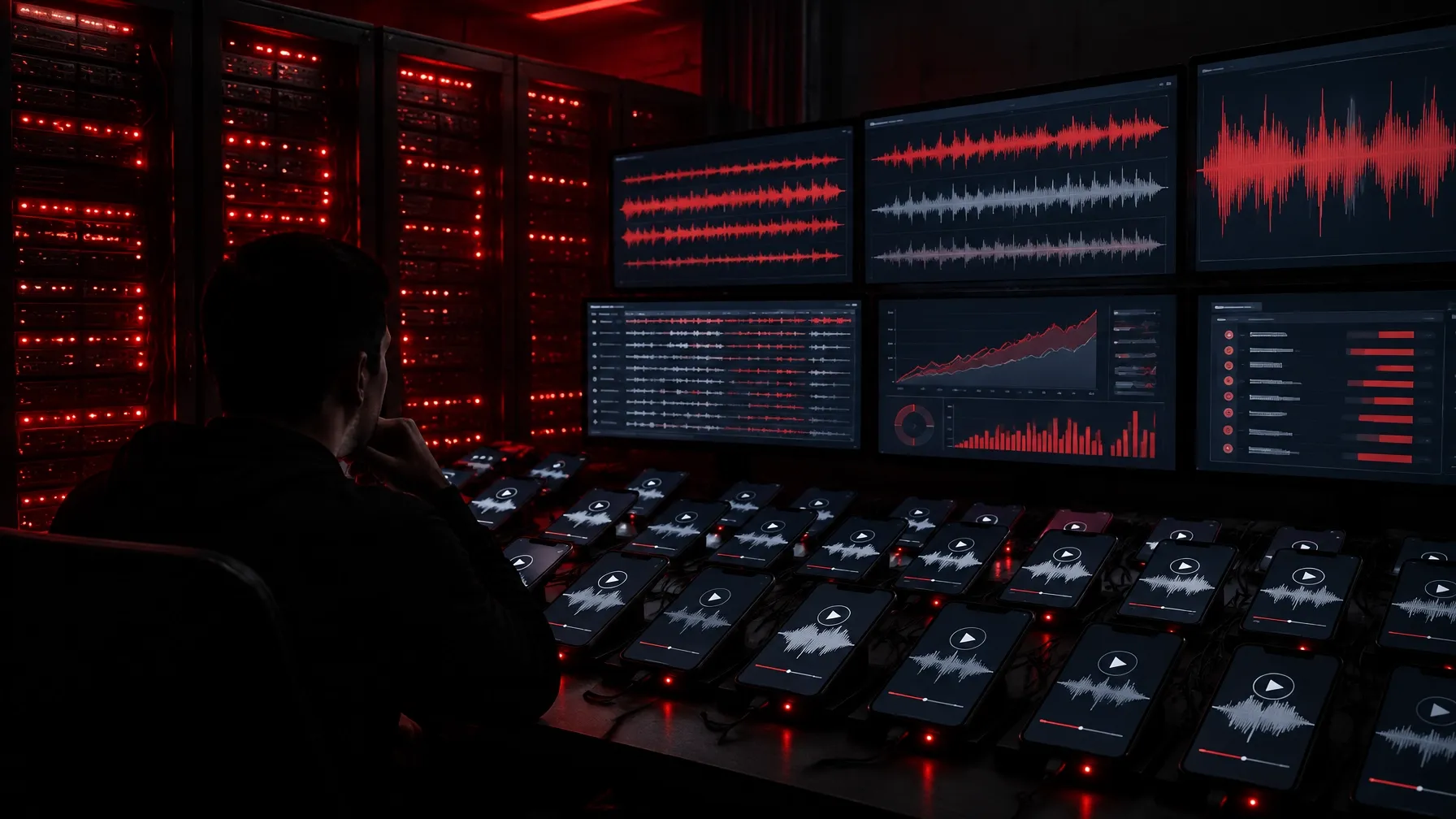
Bots looping songs around the clock
Fake accounts created in large numbers
Paid “streaming farms”
Manipulated plays from compromised user accounts
AI-generated noise, loops, or low-effort songs uploaded at scale
Track titles, artist names, or metadata designed to confuse listeners and collect someone else’s traffic
Services that promise guaranteed streams, playlist placement, or “promotion” for a fee
The money problem comes from the way many streaming platforms calculate royalties. In a pro-rata system, revenue is placed into a shared pool and divided according to each track’s share of total streams.So when fake tracks collect artificial plays, they can increase their share of that pool. That can reduce the share available to legitimate artists and songwriters.One fake stream may be worth only a fraction of a penny. Multiply that by millions: or billions: and the impact becomes serious.Recent reporting from
Digital Music News,
Music Ally, and
Billboard has connected the growth of AI-generated music to the larger fraud problem. AI tools can make it cheap and fast to create huge amounts of music. If that music is then connected to automated listening, it can be used to target royalty pools at scale.This does not mean every AI-assisted song is fraudulent. An artist can use AI as part of a legitimate creative process. The issue is whether music is being created and distributed primarily to manipulate plays, mislead listeners, or capture royalties without genuine audience demand.The independent artist checklistThe new anti-fraud push is aimed at distributors and platforms, but independent artists still have work to do.1. Keep your metadata cleanYour metadata is the information attached to your release. It helps platforms, distributors, collection societies, and listeners identify the music correctly.Double-check:
Artist name
Featured artist names
Song title and version information
Writer and producer credits
Publisher information
Label or rights-owner information
Release date
Territory information
Explicit-content status
Cover-art details
AI-related disclosures when required
Small errors can create payment delays, incorrect artist-page placement, or conflicts with another release.2. Register your releases properlyEvery recording should have the correct
ISRC, or International Standard Recording Code. The ISRC identifies a specific sound recording across platforms and services.Make sure the ISRC stays consistent when the same recording appears on:
Streaming services
Music videos
YouTube Content ID
Social platforms
Radio submissions
Licensing databases
Also separate the two sides of your music rights:
The master recording is the recorded performance.
The composition is the underlying song: the lyrics, melody, and songwriting.
If you wrote the song, register the composition with your performing rights organization. In the United States, that may include ASCAP, BMI, SESAC, or another appropriate rights organization. Mechanical royalties may also involve The MLC, depending on the use and territory.3. Understand SoundExchangeSoundExchange collects digital performance royalties for sound recordings played on eligible non-interactive services such as SiriusXM, Pandora’s radio service, and webcasters.It does not replace your distributor, publishing administrator, or performing rights organization. It also generally does not collect the same type of royalties generated by on-demand services such as Spotify or YouTube.If you are a featured artist or own your master recordings, register and claim your recordings through
SoundExchange. Correct ISRCs and accurate performer information help SoundExchange match performances to the right people.For a related video explainer, use this
YouTube search for SoundExchange digital performance royalties.4. Be careful with stream-boosting offersIf someone guarantees a specific number of streams, be cautious.Real promotion can create exposure, but nobody can honestly guarantee that thousands of real people will listen to a song. Some services use bots or questionable playlist networks while presenting themselves as marketing companies.Warning signs include:
Guaranteed stream counts
No explanation of where listeners come from
Requests for your streaming login
Pressure to provide payment immediately
Promises of chart placement
“Private” playlists with no public identity
Sudden streams from one unfamiliar territory
Large numbers of plays with little or no saves, follows, comments, or repeat engagement
If you believe your release received suspicious activity without your involvement, save your analytics and contact your distributor quickly.5. Ask your distributor direct questionsYou should know how your distributor handles fraud before there is a problem.Ask:
How do you detect artificial streaming?
Do you review releases before delivery?
What happens if a platform flags my track?
Are royalties withheld while an investigation happens?
How can artists appeal a mistake?
Do you participate in industry anti-fraud programs?
How do you handle AI-generated or AI-assisted music?
Will you notify me if my release is removed or demonetized?
The goal is not to assume every distributor is bad. The goal is to understand the rules protecting your catalog.
The bigger picture: transparency is becoming standardThe Streaming Integrity Initiative connects to a wider push for transparency across the music business.Earlier in 2026, IFPI and music-industry partners introduced voluntary labels for recordings that are
AI-Generated or
AI-Assisted. Those labels are designed to give listeners, platforms, and rights holders clearer information about how a recording was made.That effort connects directly to anti-fraud work. When distributors have better metadata, they can make better decisions about rights ownership, AI involvement, suspicious uploads, and potential abuse.IFPI has also introduced principles for how AI-developed recordings should qualify for certain official charts. The basic idea is simple: music should be properly identified, legally created, and free from manipulation if it is going to compete for chart recognition.This is bigger than one new program. The industry is moving toward a system where:
Artists are expected to provide accurate information.
Distributors are expected to verify and screen content.
Streaming platforms are expected to detect suspicious behavior.
Industry partners are expected to share credible fraud information.
Fans are given more transparency about what they are hearing.
The details are still developing, and independent artists will need to watch how these systems are applied. A legitimate viral moment should not be treated the same as a bot campaign. At the same time, real artists cannot afford to ignore suspicious activity around their releases.RAPNTV radio talking points
Fake streams are not victimless numbers: they can reduce the royalty share available to real artists.
IFPI’s new Streaming Integrity Initiative asks distributors to verify, vet, act, share, and measure.
CD Baby signed on, while DistroKid has not yet joined the new commitment.
DistroKid still has separate artificial-streaming rules and participates in the Music Fights Fraud taskforce.
Artists should never buy guaranteed streams or trust anyone promising instant chart success.
Clean metadata, correct ISRCs, and accurate writer information help protect royalty payments.
SoundExchange handles eligible non-interactive digital radio royalties, while publishing organizations handle the songwriting side.
AI labeling and streaming-fraud prevention are part of the same industry push for transparency and fairer royalty distribution.
For more music-business breakdowns and industry news, keep it locked to
PowerJDM.com and the
RAPNTV app.